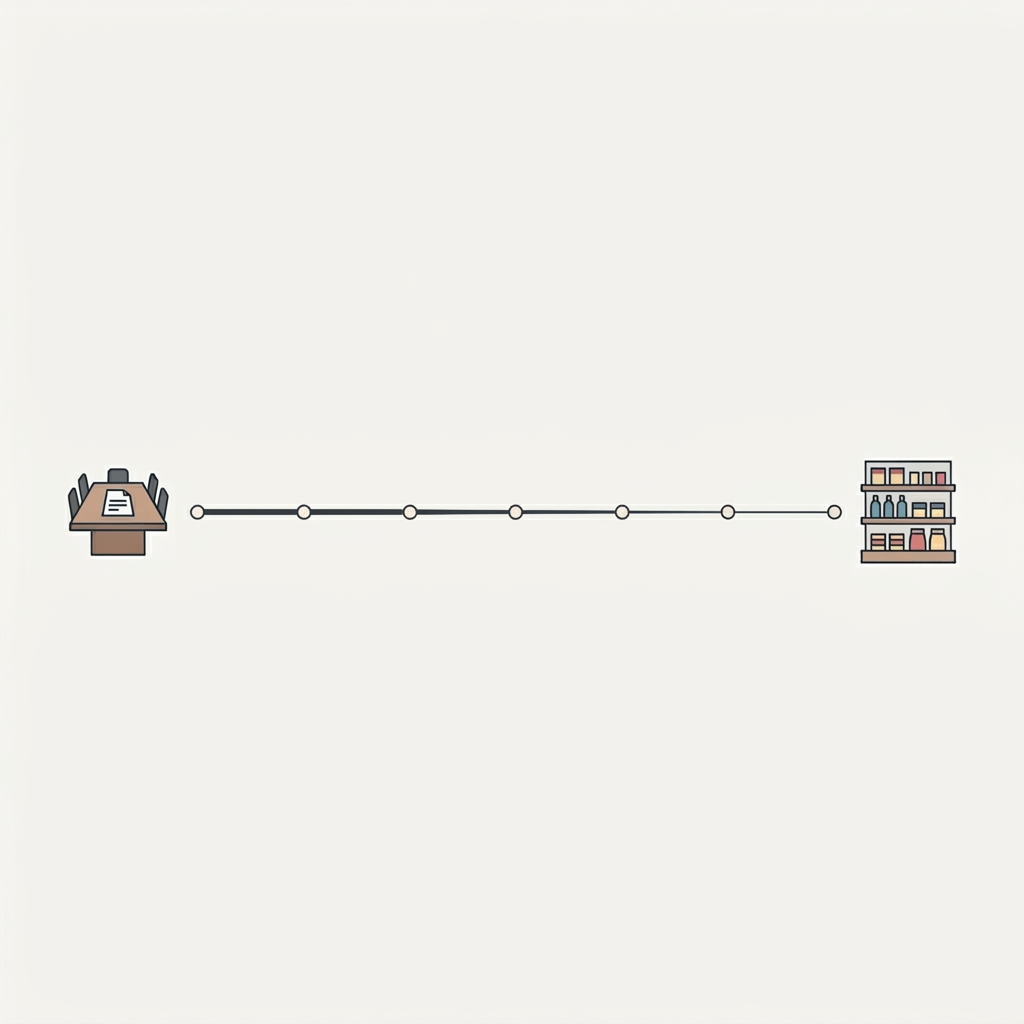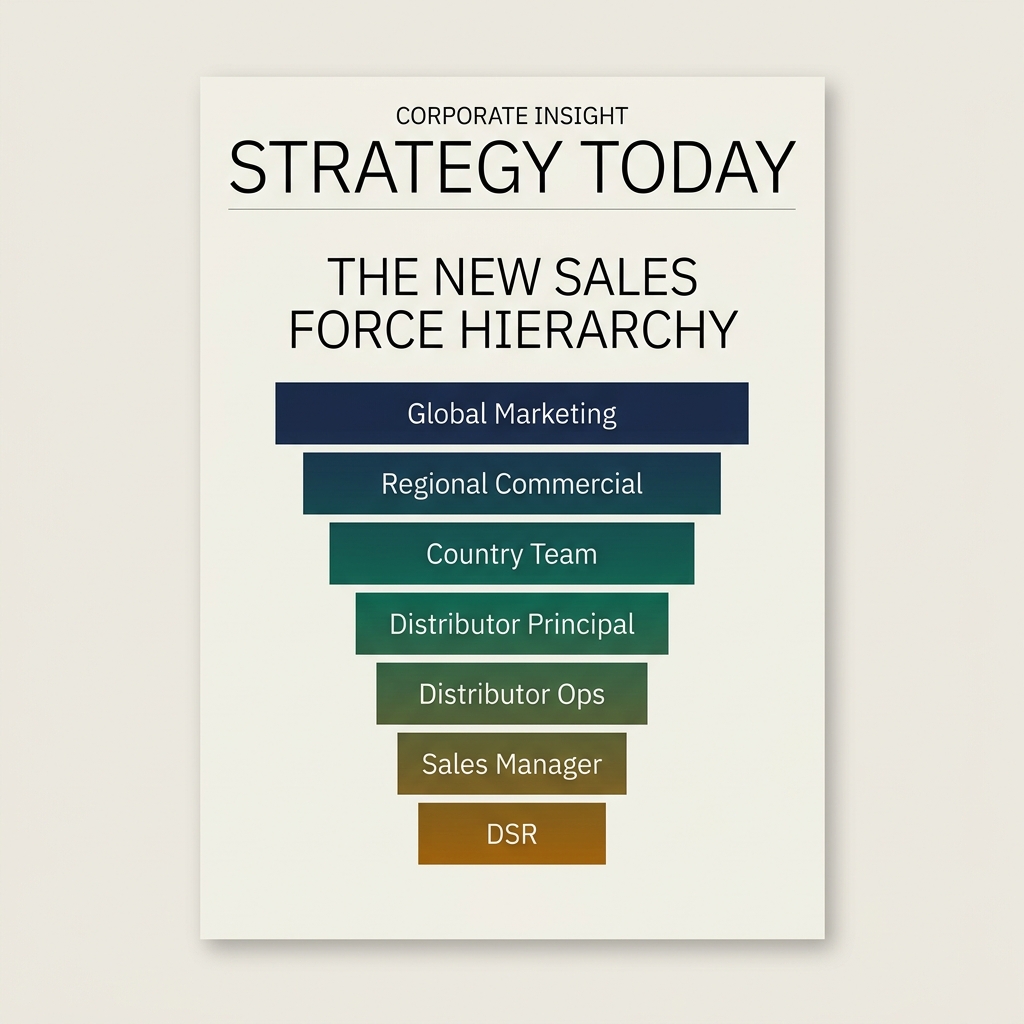
A global marketing team in Singapore spends four months designing a Q2 promotion for a premium lubricant SKU. It has a clear consumer insight, a positioning line that has tested well, a promotional mechanic tied to specific outlet tiers, and a pricing architecture designed to protect the distributor margin while accelerating sell-through. It lands on the desk of the Regional MD for South East Asia on a Monday morning. By Friday, it has been translated, reframed, summarised, localised, adapted, filtered, and simplified through seven layers of human communication. By the time it reaches a distributor sales rep visiting a motorbike workshop in Surabaya on Tuesday morning of the following week, it is unrecognisable. The DSR pitches the old SKU by habit, mentions the new one in passing, and closes the order the same way they closed it last month. The promotion dies at the last mile, and nobody in Singapore ever finds out why.
This is not a story about one failed promotion. It is the default outcome of the standard distribution architecture. Every FMCG company that sells through third-party distributor networks lives with a version of this story, and most of them have decided it is simply the cost of doing business in emerging markets. It is not. It is the cost of having no information architecture between the strategy and the shelf.
The seven layers of degradation
Count the handoffs. A regional commercial team briefs a country commercial team. The country team briefs the distributor principal. The distributor principal briefs their operations manager. The operations manager briefs a sales manager. The sales manager briefs a team lead. The team lead briefs the DSR at a Monday morning huddle. Each of those handoffs loses information - intentionally or otherwise. The country team strips the global positioning of nuance that doesn't translate. The distributor principal reframes the commercial ask to protect their margin story. The operations manager simplifies the SKU details. By the time the DSR hears it, the promotion has become "push the new synthetic - bigger margin for us this quarter."
If each layer preserved 90% of the original strategic intent - and 90% is generous - then after seven layers the DSR receives roughly 48% of what the Singapore team designed. Real studies of internal communication in distribution networks put the preservation rate lower, typically 60–70% per layer. At 65% fidelity per handoff, the DSR receives about 5% of the original strategy. Most companies measure this implicitly every time a national launch underperforms in the field without any clear cause. The cause is always the same. The information didn't arrive.
This is not an execution problem
The instinct, when a launch fails in the field, is to blame execution. Push harder. Run more training sessions. Bring the DSRs into a workshop. Send a regional manager to ride with them for a week. Some of this helps at the margins. None of it solves the underlying problem, because the underlying problem is not that the DSR is lazy or untrained or unmotivated. The underlying problem is that the DSR is making decisions at the moment of truth - standing in front of a workshop owner - based on incomplete, degraded, and sometimes contradictory information. They close the order the safe way because the safe way is the only way they have enough information to execute confidently.
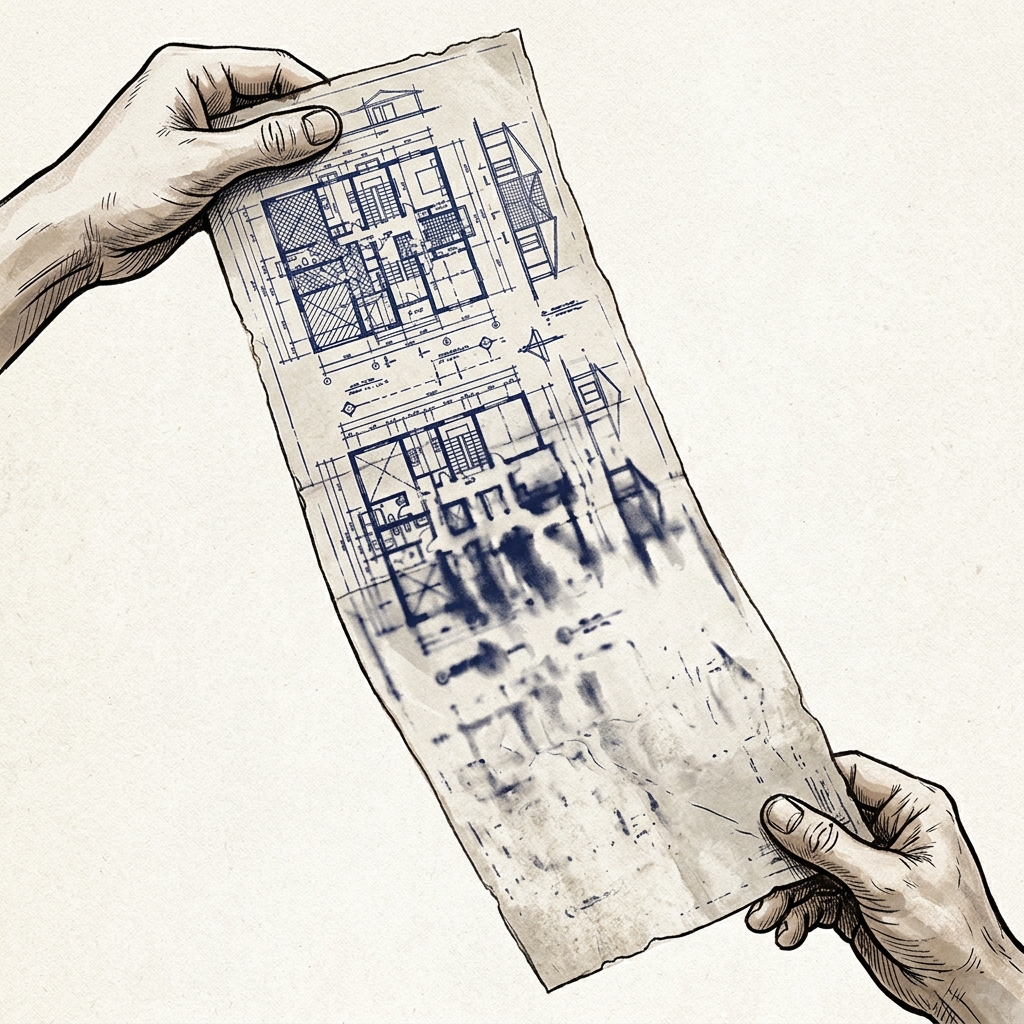
The Regional MD, meanwhile, is operating with the opposite problem. They have too much information, all of it lagging. They open a dashboard on Tuesday morning and see that sales last month were behind plan. They don't see why. They don't see which SKUs underperformed in which channels. They don't see whether the distributor was stuffed at quarter-end and is now sitting on inventory. They don't see that the new synthetic launched with 11% distribution instead of the planned 38%. They see a red number. An email goes out: push harder. The channel stuffs. Distributor trust erodes. Next month the dashboard says the same thing, and the cycle repeats.
The information architecture fix
The solution is not more reporting. More reporting makes the problem worse by adding noise. The solution is an information architecture that carries strategic intent from the boardroom to the shelf without degradation - and carries ground truth from the shelf back to the boardroom without filtering. This is a platform problem, not a process problem.
The architecture has three requirements. First, strategic intent must be machine-readable at every layer. When the Singapore team commits to a Q2 promotion, the promotion exists as a structured object in a system - not as a PowerPoint deck that gets rewritten at each handoff. Every downstream party reads the same object. Second, field actuals must flow back as structured, verified data. A DSR visit is not a self-reported checkbox. It is a GPS-verified event with a photograph, a captured order, a structured refusal log, and a provenance score. Third, the middle layers stop being translators and become interpreters. Their job is no longer to pass the message down. Their job is to read the structured object and add the local context the algorithm cannot - which specific outlets in their patch will respond to which specific mechanics, based on their judgement built from years of running this territory.
When that architecture exists, the DSR arrives at the workshop in Surabaya on Tuesday morning with a pre-visit brief. It names the owner. It shows the last three orders and the refusal reasons. It ranks the SKUs to push based on what this specific outlet has bought before and what the promotion mechanic rewards. The DSR is not making an improvised decision. They are executing a calibrated one. And every outcome - the order, the refusal, the upsell - writes back to the same system the Singapore team uses to plan Q3. The loop closes. The degradation stops.
This is the core of what Strata Core is. Not a dashboard. Not a CRM. A commercial operating system that carries intent down and ground truth up, with structured data flowing in both directions at every layer. Build that, and the DSR stops being the final filter that strips strategy of its meaning. They become the point where strategy turns into revenue and intelligence is created.