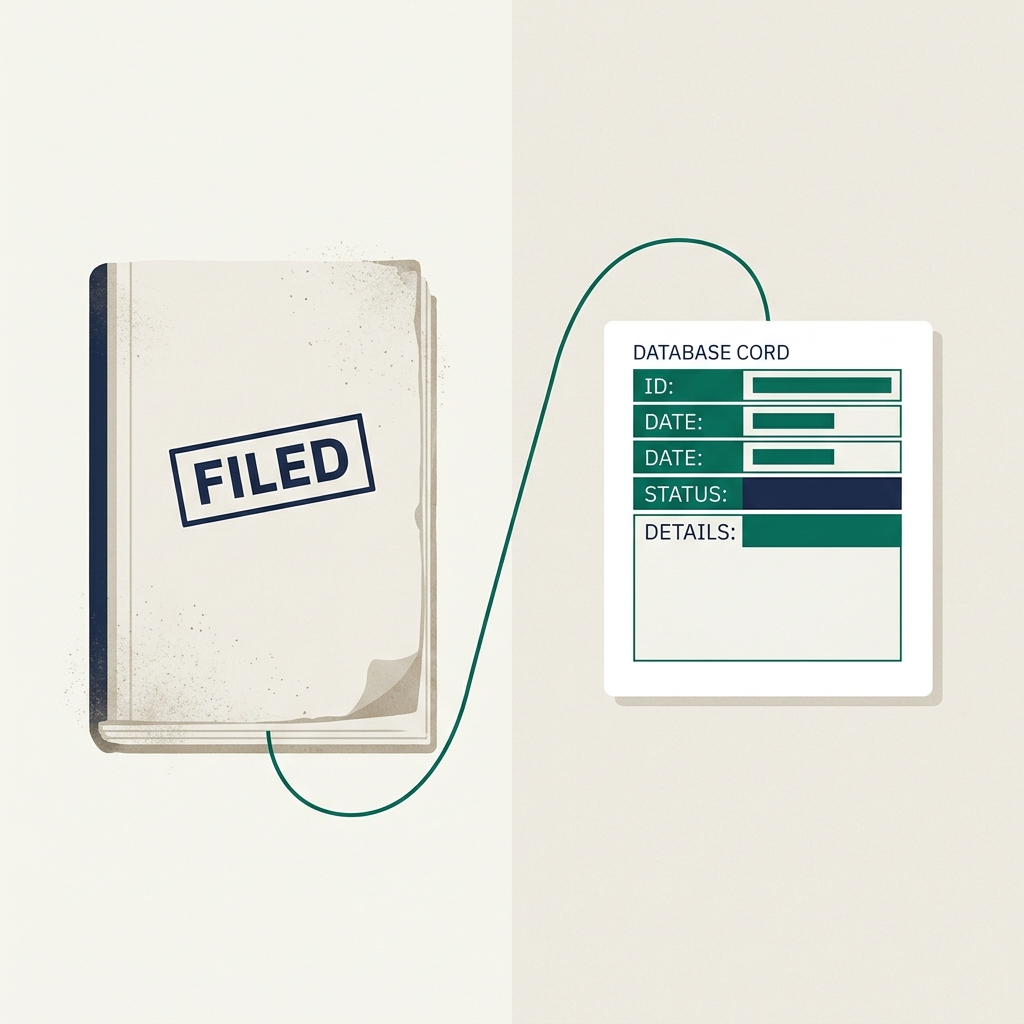
In every FMCG company selling through distributors, there is a ritual. It happens once a year, sometimes twice. The commercial team from the brand side and the ownership team from the distributor side sit in a room together for two days. They negotiate a Joint Business Plan. They agree on revenue targets, coverage targets, investment levels, trade terms, a marketing calendar, and a set of operational commitments. Everyone signs. The document gets printed, filed, and circulated to five or six people on each side. Then it sits.
It sits because it is a document. And documents, once printed, do nothing. They do not track compliance. They do not detect drift. They do not produce alerts when a commitment slides out of variance. They do not tell a Sales Manager in April that the distributor who signed for 450 outlet coverage is sitting at 380 with a stable trend - and that this is a capacity problem, not a motivation problem, so pushing harder will not fix it. Documents describe intent. Systems enforce it. Every JBP in every FMCG company today is a document, and that is why the review meeting three months later is always the same argument with different numbers.
The scale of the failure
The numbers tell the story. 27% of CPG companies report no real-time insight into retailer or distributor compliance with agreed plans. 64% of manufacturers say getting timely data from distributors is a persistent operational challenge. There is no industry-standard JBP scorecard - meaning every trading partnership invents its own format, its own scoring mechanism, and its own review cadence. The result is that the quarterly review meeting is spent arguing about definitions rather than making decisions. Was the revenue commitment inclusive or exclusive of eCommerce? Did coverage mean active outlets or listed outlets? Was AOV measured on invoice value or net of returns? Every company has a different answer, and the distributor has a financial incentive to pick the interpretation that flatters their performance.
Software has tried to solve this for two decades and mostly failed. Salesforce's Consumer Goods Cloud has a JBP module that is a template layer on top of their CRM. SAP has trade promotion management modules that treat the JBP as a side artifact. Smaller vendors - Repsly, GoSpotCheck, StayInFront - have strong field execution tools but little or no JBP concept. The common pattern is that JBP is treated as documentation of an agreement rather than as the agreement itself. This is a category error. It is the difference between a contract that can be enforced and a memorandum of understanding that gets filed.
What it looks like when the JBP becomes a record
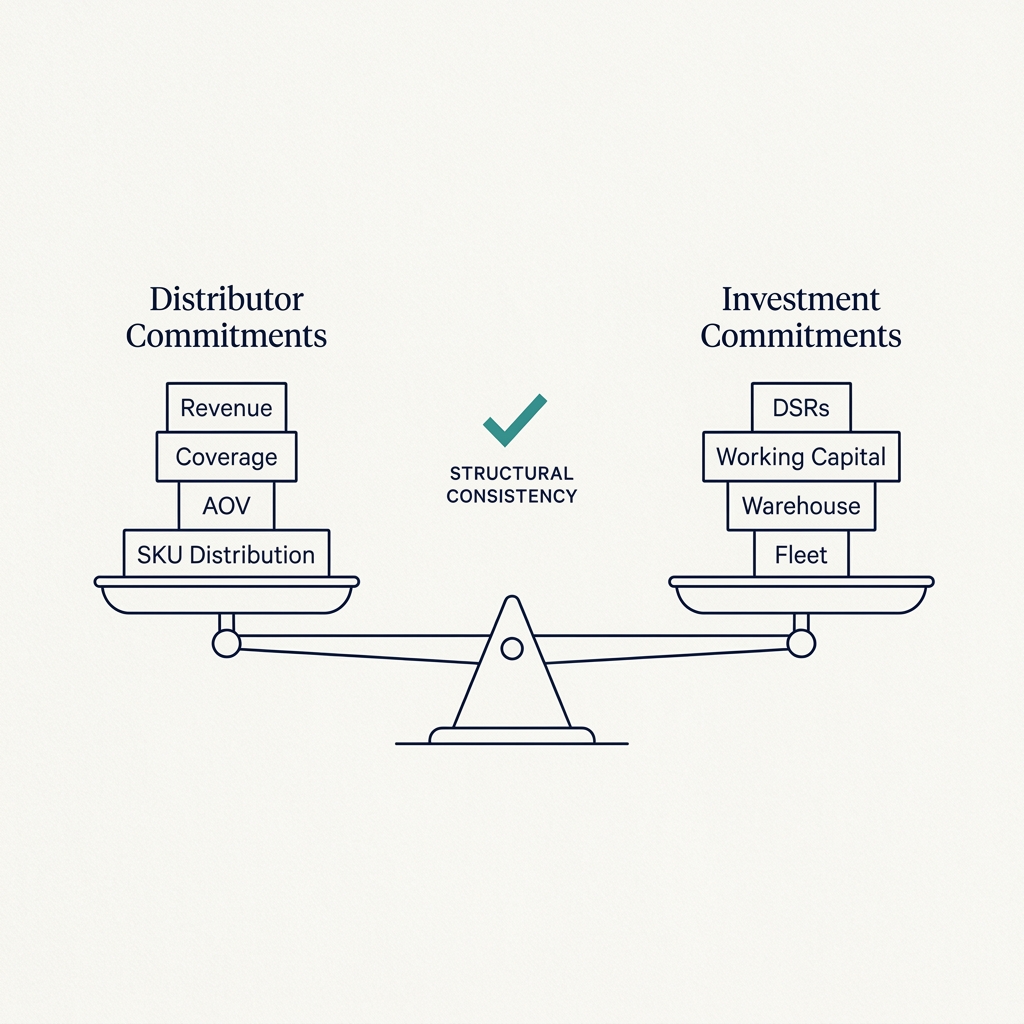
Imagine the JBP as a versioned, bilateral, signed database record. It has a lifecycle: Draft, Agreed, In-Review, Closed. It contains structured commitments on both sides - the distributor's commercial commitments (revenue, outlet coverage, average order value, SKU distribution, new outlet acquisition), their investment commitments (DSR headcount, working capital, warehouse space, vehicle fleet), and the tenant's enablers (trade spend, payment terms, margin architecture, marketing support). Each commitment has a weight in the composite compliance score, a tolerance band, a measurement method, and a data source.
When both parties sign, the record moves from Draft to Agreed and the compliance engine activates. Every day, a background job evaluates each commitment against the actuals flowing in from Module 3 - GPS-verified visits, captured orders, sell-out submissions. The composite score updates. When it drops below the tenant-configured alert threshold, a signal fires. The Sales Manager sees it in their morning briefing before they see the email from their boss asking why the region is behind plan.
The structural consistency check is the innovation most companies miss. Before a JBP can move to Agreed status, the platform validates arithmetically that the distributor's investment commitments can physically deliver the commercial commitments. If the distributor has committed to 720 outlet coverage per month and their DSR headcount plus route capacity can physically execute 580 visits per month, the JBP does not move forward. Both parties have to adjust - either the coverage target comes down, or the DSR headcount goes up, or the outlet tier mix shifts to something more achievable. The negotiation surfaces a reality check that most JBP negotiations never get to because both parties are negotiating in Excel.
Why the review meeting changes
The quarterly review meeting is where the new architecture pays back most visibly. In the old world, the meeting starts with both parties pulling up their own version of the numbers. Twenty minutes are spent reconciling data. Another thirty are spent arguing about whose fault it is that revenue is behind. The last hour is spent agreeing on a list of actions that nobody will execute because nobody agrees on the diagnosis.
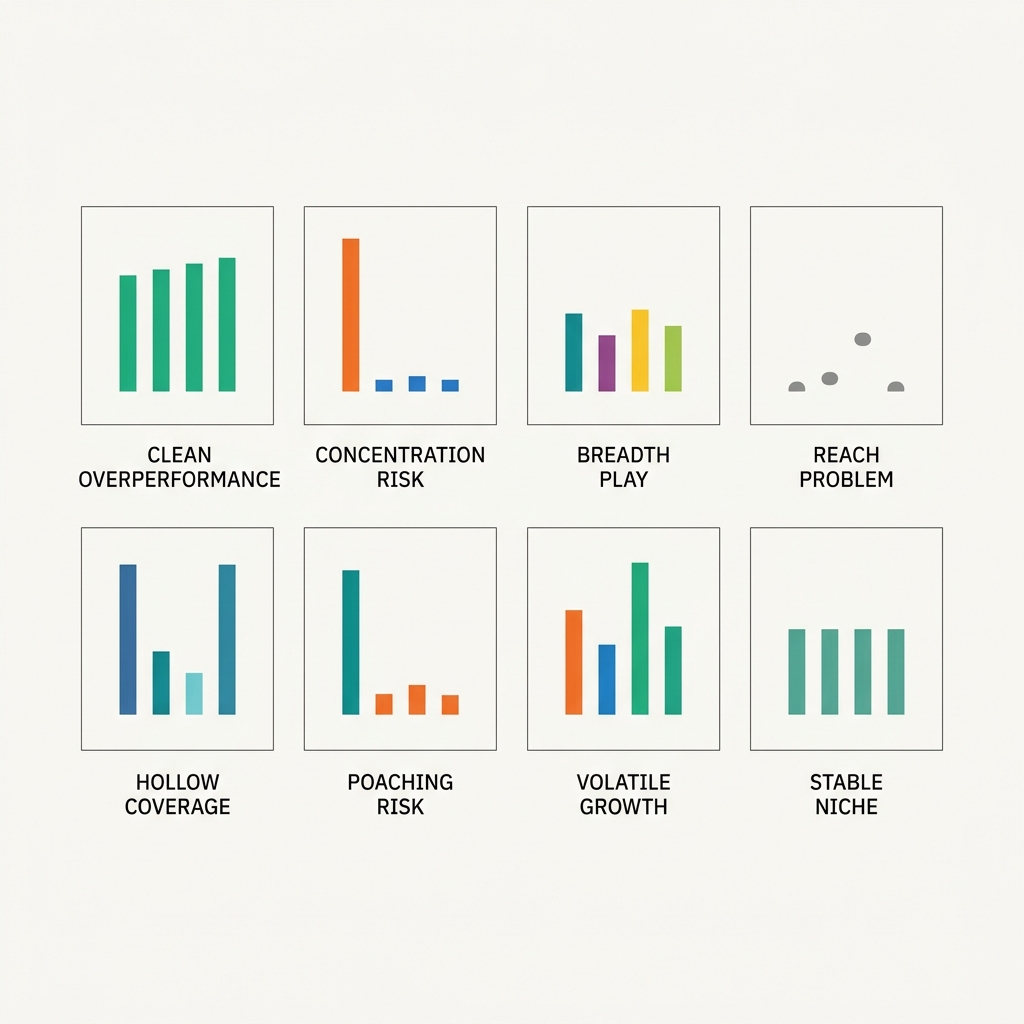
In the new world, the meeting opens with the composite compliance score and the performance signature for the quarter. The signature is generated by reading four commitment gaps simultaneously - revenue, coverage, AOV, SKU distribution - and classifying the combination into one of eight diagnostic patterns. If the signature says "hollow coverage," both parties know before the meeting starts that the DSRs are visiting outlets but not selling the range. The conversation is not about whether that's true. It's about what to do about it - a DSR retraining programme, an SKU rationalisation, a promotion on the underperforming range, or a review of the outlet tier classifications. Both parties walk out with a signed amendment to the JBP, a new tolerance on the SKU distribution metric, and three actions with named owners and due dates.
This is what it means for the JBP to stop being a document and start being a record. The document describes the intent. The record enforces it. A system that enforces a JBP is structurally more valuable to both sides than a document that describes one, because the enforcement is what produces the trust that lets the relationship deepen over time.