A Distributor Sales Rep in Jakarta starts their morning at 7:30am. They have a printed list of 14 outlets to visit today, in an order roughly determined by geography but mostly by habit. They have a target for the day - usually a revenue number and a visit count - delivered by their team lead in a brief Monday-morning huddle. They have a phone, a ledger, and a bag of samples. They do not have the history of the outlet they are about to enter. They do not have the name of the owner. They do not know that the owner's last order was three weeks ago and contained only two SKUs out of a possible seven. They do not know that the owner has refused the new synthetic range four times in the last two months, always citing the same price objection. They do not know that a competitor promotion ended last week that might make this a better moment to pitch. They walk into the outlet and try to close the order the same way they closed it last month.
This is not incompetence. It is information poverty. And it is the exact point in the distribution chain where strategy becomes revenue - or doesn't. If the DSR is operating on habit and partial information, strategy does not become revenue. It becomes an argument back at headquarters about why the quarter underperformed.
What the DSR actually needs
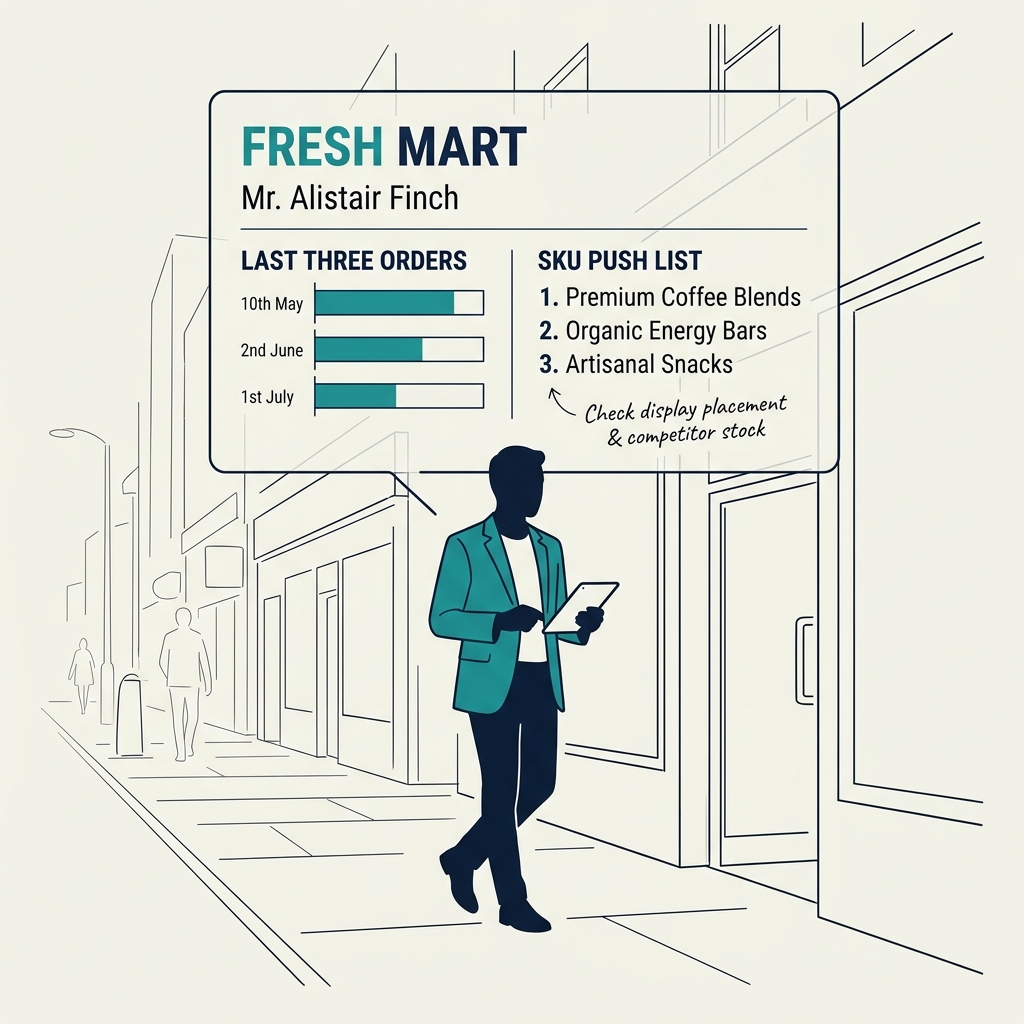
Four things would change the DSR's morning. First, a pre-visit brief for every outlet, generated before they arrive, containing the history that matters: last three orders with refusal reasons, the outlet owner's name and preferred communication mode, the current relationship temperature score, and any open issues from the last visit. Second, an AI-ranked SKU push list specific to this outlet, accounting for what they have bought before, what their current inventory position is likely to be, what promotions are active in their tier, and what their outlet-specific purchase patterns suggest they are most likely to say yes to. Third, a structured way to capture refusals when they happen - not a free-text box that gets ignored, but a taxonomy that routes the refusal reason to the appropriate intelligence layer so that pricing teams, competitor intelligence teams, and S&OP teams all receive the signal. Fourth, a clear, verified record of what actually happened - GPS-verified check-in, photographed shelf, captured order, signed proof of delivery - so that when the month closes and the Regional MD asks what happened, the answer is not a narrative but a data record.
With those four things, the DSR walks into the outlet in Jakarta knowing they are there to discuss a specific mechanic for the specific SKU range the owner is most likely to buy, with a backup pitch for the SKU the owner refused last time (because the competitor promotion ended), a reminder to capture the competitor price observation on the shelf, and a clear order-of-conversation that opens with a personal note about the owner's recent anniversary (logged in the CRM). The visit has become an executed strategy, not an improvised transaction. And crucially, the DSR does not need fifteen years of experience to execute it. The system carries what used to live in the veteran's head.
The economics of day-one productivity
This is where the architecture produces a commercial consequence most FMCG companies do not think about. The DSR role in distributor markets has extreme turnover. A new DSR takes six to twelve months to reach full productivity, and many leave before they get there. The cost of that ramp is enormous - lost orders, damaged relationships, mistrained outlets, and a permanent overhang of DSR vacancy costs in the distributor's P&L. Every FMCG commercial leader knows this is a problem, and most have decided it is an unsolvable industry-wide pattern.
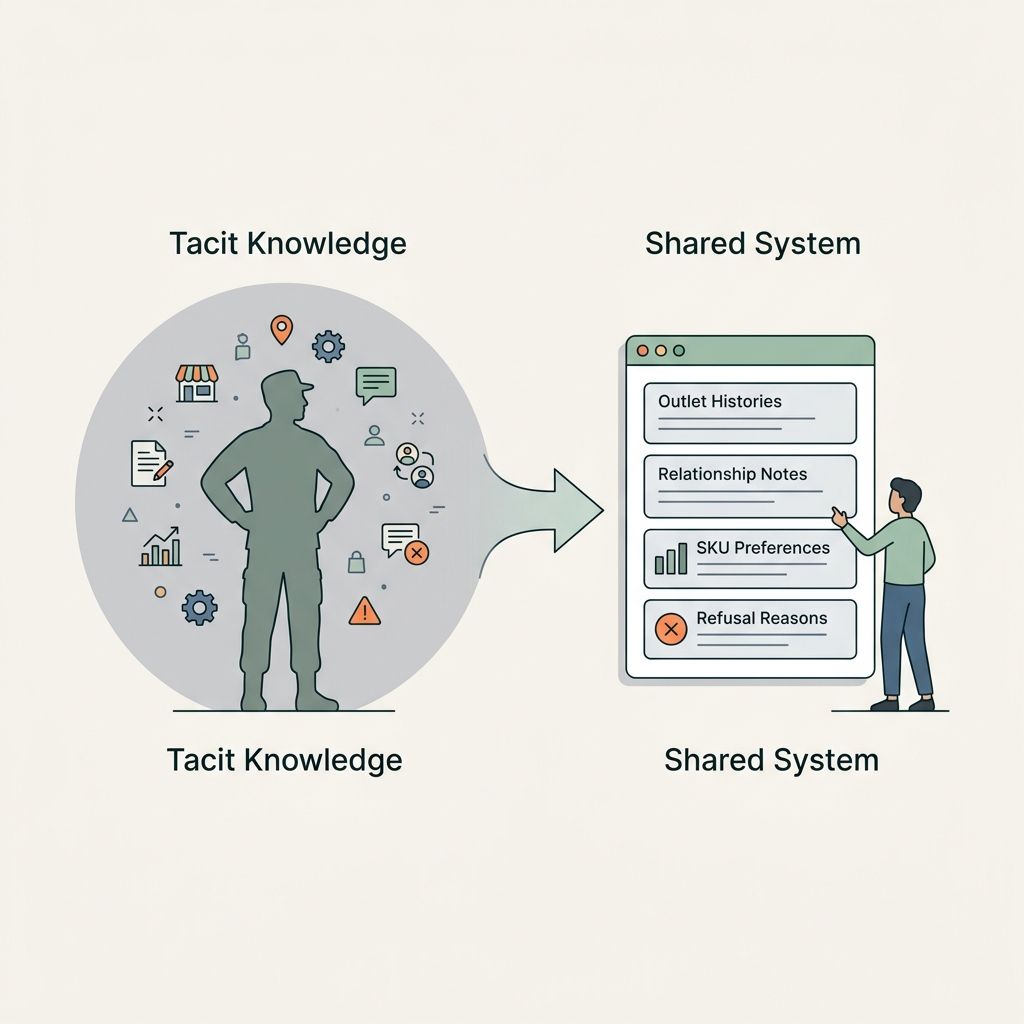
It is not. It is a consequence of relying on tacit knowledge that only accumulates with tenure. If a new DSR with the app performs at veteran productivity levels on day one - because the system carries the outlet history, the SKU-outlet fit scores, the relationship context, and the daily brief - then the ramp problem disappears. The distributor's DSR capacity is no longer fragile to turnover. The tenant's commercial plan is no longer fragile to turnover in a layer they do not control. And the economics of the distributor improve measurably because the DSR vacancy cost drops toward zero.
The ground truth guarantee
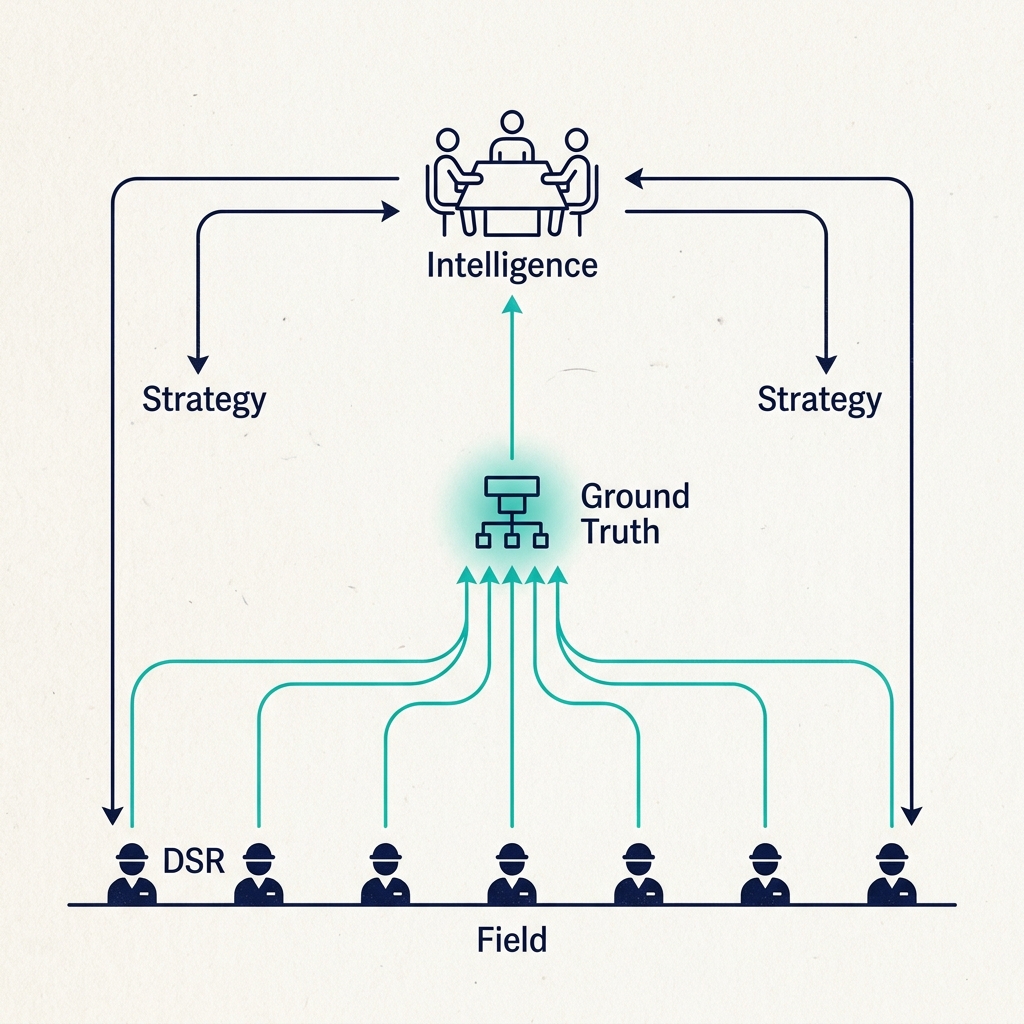
The second consequence is less obvious but equally significant. When every DSR visit is GPS-verified, every shelf is photographed with AI classification, every refusal is structured, and every order is captured in a single system, the data that flows back to headquarters is no longer self-reported. No DSR can log a visit that didn't happen. No distributor can enter junk sell-out data to game their incentive. No sales manager can report coverage that wasn't executed. The data is ground truth, and ground truth is the foundation of everything else the platform does.
The implications compound. Every intervention the platform recommends is grounded in real visits and real refusals, not in distributor-submitted summaries. Every JBP compliance score reflects what actually happened in the field, not what the distributor said happened. Every commercial decision the Regional MD makes on Tuesday morning is based on Monday's actuals, not on a monthly report with a two-week lag. The trust that used to require years of relationship-building between tenant and distributor is instead engineered into the data layer. The relationship becomes less about whether you can trust the distributor's numbers and more about what to do with the numbers now that trust is a given.
The DSR becomes the intelligence creator
The final inversion is the most important one. In the old model, the DSR is at the bottom of the information hierarchy - they receive instructions and execute them. In the new model, the DSR is at the top of the intelligence creation hierarchy - every visit they execute generates new data about outlet health, competitor activity, price sensitivity, and promotion effectiveness that no other role in the organisation can produce. The Regional MD's Monday morning dashboard is built from Friday afternoon's DSR visits. The S&OP signal that adjusts next quarter's production plan comes from last week's refusal patterns. The brand team's Q3 promotion design is informed by the shelf photography from Q1.
This is a reframe of what the DSR role is. They are not distribution labour at the end of the value chain. They are the sensor network that makes the whole system intelligent. Pay them accordingly. Equip them accordingly. Measure them accordingly. The company that figures this out first will build a moat that the company relying on their veteran DSRs' tacit knowledge cannot close.